In today's real estate market, where dozens of new projects appear every year, investors are faced not only with the choice of location or layout, but also with the risk of encountering fraudsters. Unscrupulous developers may promise “dream homes” at attractive prices, but behind the glossy advertising often lie schemes that end in frozen construction projects and lost funds. Let's figure out how to recognize whether you are dealing with a reliable developer or a potential scam.
Legal clarity: the first test of trust
First of all, it is worth checking the documents. A legal developer never hides legal information about their property. Be sure to ask for:
approved for work (IMB or PBG) - confirms that the project is legal;
documents for land - whether the company has the right of ownership (Freehold / Hak Milik) or a long-term lease (Leasehold / Hak Sewa);
Certificate of Construction Completion (SLF) - for completed or completed buildings;
purchase and sale agreement (PPJB or AJB) is a document that confirms the rights of the buyer.
The absence of any of these items is a warning sign. If company representatives evade answering or offer a “non-standard scheme,” you should be wary.
Developer reputation: history speaks for itself
A reliable developer is not afraid of transparency. Before investing, it is worth studying the company's previous projects: were there any delays in delivery, conflicts with owners, or lawsuits.
Reputation in real estate is built over years, so even a brief review of open sources (buyer reviews, media publications, court records) can give you a realistic picture.
Suspicious signs:
no mention of the company in open databases;
different legal entities for each property;
negative reviews that are deleted or ignored;
promises that “everything will be ready in a year” without clear evidence.
A real developer demonstrates consistency: the same founders, a stable address, a clear history of completed projects.
Financial traps and aggressive marketing
Another warning sign is overly favorable terms. If you are offered a “today only” discount or promised super profits on resale, this may be an attempt at psychological pressure.
What should not be in the financial section:
no escrow accounts or transparent financing scheme;
requirement to pay the full amount immediately without guarantees;
non-transparent origin of the investment company raising funds;
emphasis on “cheapness” instead of quality.
A legitimate business always has a clear financial structure, does not hide its partners, and does not require hasty decisions.
Ways to protect investors from fraudsters
To avoid falling into the trap of fraudsters, act according to the principle of “trust, but verify.”
Recommendations:
Consult a local lawyer who specializes in real estate in Indonesia. He will check the documents and explain the legal risks for foreigners.
Check the developer - find out if the company is registered in Indonesia (through OSS Indonesia or Ministry of Law and Human Rights) and has a valid tax number (NPWP).
Visit the site in person - make sure that construction is actually underway and not just on renderings.
Do not invest in properties without building permits (IMB/PBG) or without land use rights - even if the price seems extremely favorable.
Keep all payment documents, receipts and official correspondence - they will serve as evidence in case of disputes.
In a highly competitive market, developers often try to attract customers with flashy slogans. But the true indicator of reliability is not bright visualizations, but transparency, legal clarity, and fulfilled promises.
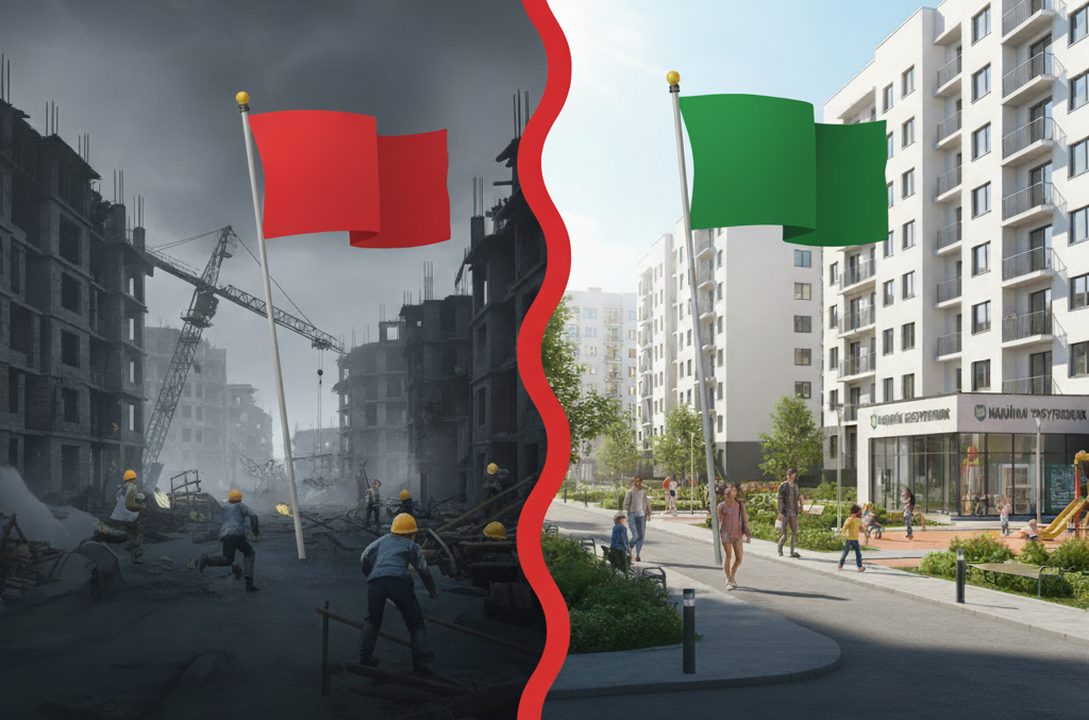
Investing in real estate is not just about square meters, but above all about trust. So, if you see even one red flag, it is better to take a step back than to lose everything. A reliable developer never makes a customer doubt their legality.